Opening a gym: the 90-day plan for success

Clear your positioning and your business model
Before opening a gym, set a clear course. Good positioning saves months and thousands of euros.
Choose a profitable niche
- Priority audience: beginners, cross-training, active seniors, health sports, local athletes.
- Differentiators: extended hours, individualized follow-up, small groups, nutrition course.
- Quick indicators: 30 interviews with local prospects, 10 signed pre-sales, 1 waiting list.
Tip: test your promise with a 2-week “pop-up” pre-opening in a partner location.
Define your offers and prices
Structure a simple range: 3 offers maximum.
- Unlimited subscription with supervised access.
- Book of small group sessions (8-12 people).
- Premium coaching 1:1 or 2:1.
Calibrate the price to the value, not to the neighbor. To go further on pricing, see this practical guide: set your sports coach rates correctly.
Build a simple and useful forecast
- Member objective to 12 months: 180-350 depending on surface area and offer.
- Average monthly ticket (ARPU): €55-120.
- Target churn rate: < 4%/month.
- Break-even point: when margin on variable costs covers rent + salaries + fixed charges.
An effective forecast fits on one page. Adjust it each month with your actual figures.
Status, insurance and compliance
- Status: SAS/SARL for a room, micro less suitable.
- Insurance: pro liability, multi-risk, operating losses.
- Key compliance: fire safety, PMR accessibility, displays mandatory.
To structure your tools and your back office without complexity, explore the EKKLO platform: EKKLO
Find the right location and master the lease
Location is the #1 lever for your memberships the 18 first months.
Location criteria that convert
- Pedestrian/car flow, visibility, ease of parking.
- Proximity to offices/schools/retails for regular peaks.
- Density of competitors and clear differentiation.
Aim for a door-to-door journey < 12 minutes for 70% of your targets.
Surface, flow and interior zoning
- 200-500 m² for a studio or box; 600-1,200 m² for a club.
- Areas: reception (10%), changing rooms (15%), stage/courses (65%), storage/offices (10%).
- Fluid circulation and “photo-friendly” spaces for social content.
Negotiate the commercial lease
- Duration: 3-6-9 classic; look for 1-2 months of rent exemption for work.
- Cap indexation and clarify recoverable charges.
- Works clause: specify responsibilities, deadlines, standards.
Standards, security, neighborhood
- Acoustic study if sensitive neighborhood.
- Evacuation plan, security lighting, fire extinguishers.
- Maintenance contract for machines and ventilation.
Finance and equip intelligently
The financial package must support profitability from 6-9 months.
Typical budget: CAPEX and OPEX
- Works and development: 40-120 k€.
- Equipment (cardio, free charge, small equipment): 60-180 k€.
- Opening (communication, security deposit, software): 15-40 k€.
- Starting cash flow: 3-6 months of fixed charges.
Monthly OPEX: rents, salaries, insurance, energy, marketing. Keep 8-12% of turnover in marketing for the first 6 months.
New, reconditioned or leasing?
- New: premium image, extended warranty.
- Reconditioned: -25 to -40% on the entry ticket.
- Leasing: smooths cash flow, protects cash for acquisition customers.
Combine: leasing cardio equipment + reconditioned free weights + new accessories.
Minimum viable equipment equipment
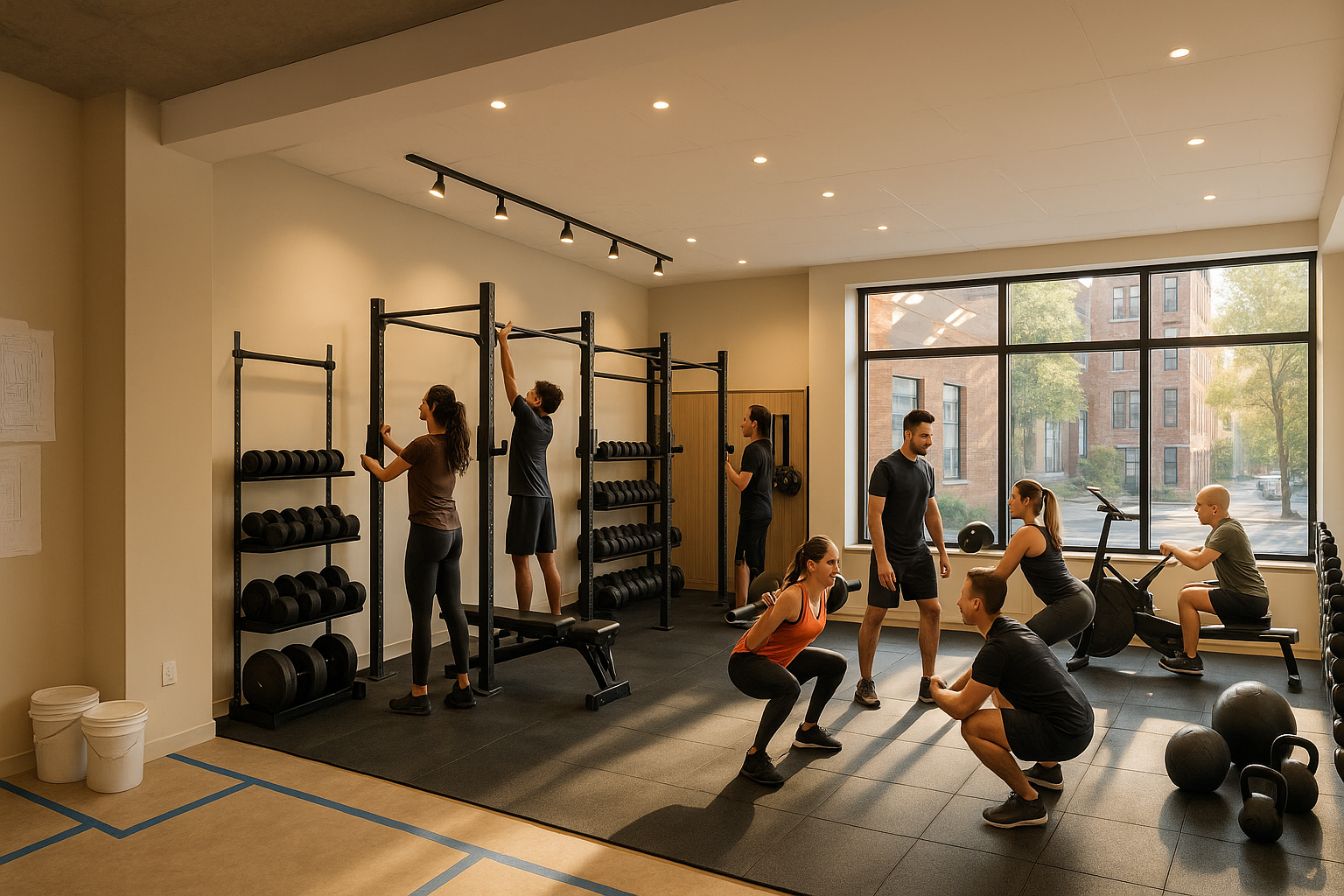
- 6-8 cardio stations, 1-40 kg dumbbell area, modular racks.
- 15-20 kettlebells, slam balls, TRX, box jump.
- 200-300 functional m² for small group classes.
Start lean. Reinvest after 100-150 members.
Essential digital tools
- Management of reservations, payments, CRM, messaging.
- Onboarding process and progress monitoring.
- Simple automations: reminders, reminders, reports.
Centralize everything with EKKLO: EKKLO for offers, schedules, payments and customer follow-up.
Process, team and member experience
A room is not distinguished by its machines, but by its service standards.
Recruitment and service grid
- 1 manager-trainer, 2-4 multi-purpose coaches, 1 part-time reception.
- Skills: teaching, security, animation, sales advice.
- Internal training: 2 weeks SOP + shadowing + monthly evaluations.
The course client in 7 steps
- Online discovery and appointment making.
- Initial assessment 20 minutes and simple test.
- Paid trial offer (7-14 days) with guided plan.
- Signing a suitable subscription.
- Onboarding: 2 supervised sessions, SMART objectives.
- Monthly monitoring: measurement, feedback, adjustments.
- Referencing: sponsorship request on day 30.
Each step must be scripted and measured.
Operational standards (SOP)
- Opening/closing, checklist security.
- Cleanliness: 3 visits/day key areas.
- Quality of coaching: ratio 1 coach/10 students in class.
- Message response time: < 2 working hours.
Satisfaction and retention
- Monthly NPS: target 60+.
- Attendance rate: 6 sessions/month min. for 70% of members.
- Quarterly progress plans and success ceremonies.
Need a boost for your first 3 clients before opening? Read this actionable guide: get your first 3 clients.
Pre-opening marketing and launch
Your marketing calendar must create demand before the finished work.
Campaign D-60 to D+30
- D-60: waiting page + founder offer (-20% for life for first 50).
- D-45: local partnerships (healthy restaurants, physiotherapists, clubs).
- D-30: staggered open days (3 dates, 30 places/date).
- D-7: local influence plan, “bring a friend” offers.
- D+7 to D+30: personalized reminders + testimonials.
Objective: 80-120 pre-sales before the big day.
Founding offers without selling out
- Value bonus (diagnosis, 1:1 session) rather than deep discounts.
- Duo/family packs to increase the average basket.
- 12 month contract with 1 month/year “freeze” for perceived flexibility.
Local content and partnerships
- 3 recurring video formats: behind the scenes work, transformations, short advice.
- Partners: nearby companies (sports breaks), schools (student rates), events.
- Monthly stand at the local market with mini tests.
Lead tracking and conversions
- SLA: call within 15 minutes after form.
- Call scripts: problem-objective-plan.
- Lead score and nurture by email/SMS.
Manage everything in EKKLO (reservations, payments, messages): EKKLO
Manage profitability and grow
Management discipline transforms a gym into a sustainable business.
KPIs to follow each week
- Leads created / Appointments made / Sales signed.
- Sales rate no-show trial: target < 20%.
- Monthly churn and main reason.
- Occupancy by slot, ARPU, acquisition cost (CAC).
30-minute meeting every Monday, decisions noted, weekly A/B tests.
Optimize occupancy and ARPU
- Move 20% of courses to underused slots.
- Upsell: move from notebook to guided subscription (+15-30 €/month).
- Cross-sell: nutrition, mobility workshops, testing.
Automate to save time
- Reservation reminders, trial reminders, subscription anniversaries.
- Autonomous check-in and intelligent waiting list.
- Automatic reports by email on Monday morning.
Get everything in place with this guide: automate your sports coach business.
Growth scenarios
- Expand the surface area or double the high-performance niches.
- Launch specialized programs (pre/postnatal, sport-health).
- Develop a complementary online offer (live/replay course).
Checklists and errors to avoid
Express regulatory checklist
- Fire safety file validated and equipment checked.
- Accessibility: ramps, toilets, signage.
- Registers: maintenance, hygiene, mandatory displays.
- Contracts: lease, insurance, GDPR for customer data.
10 common mistakes (and how to avoid them)
- Rent too big too soon → progressive surface.
- Prices copied from a competitor → calculate your break-even point.
- Bet everything on the hardware → invest first in the experience.
- Launch without pre-sales → 80+ before opening.
- No sales scripts → weekly team training.
- Too many offers → 3 clear offers.
- Ignoring data → weekly KPI review.
- Underestimating acoustics → processing as soon as the works are completed.
- Irregular communication → 90-day editorial calendar.
- No centralized tools → adopt a single platform.
90-day calendar (model)
- D-90 to D-60: area study, lease LOI, pre-budget, capture page.
- D-60 to D-30: works, orders, partnerships, pre-sales.
- D-30 to D-7: beta test, recruitment, SOP training, doors open.
- Week 0: launch, 3 events, limited founder offer.
- Week 1-4: intensive monitoring, testimonials, planning optimization.
- Week 5-12: local campaigns, upsell, referral loops.
To remember
- Clear + positioning 3 simple offers = faster conversions.
- Pre-sales (80-120) before the big day secure the break-even point.
- SOP + quality coaching beats any machine park.
- Manage every week: leads, no-show, occupancy, churn.
- Centralize reservations, payments and follow-up with EKKLO to save time.
Conclusion: Go from idea to opening in 90 days
Opening a profitable gym comes down to three pillars: clear positioning, disciplined pre-opening marketing and measured operations. By following this plan, you secure your first memberships, accelerate word-of-mouth and reach the break-even point more quickly.
Ready to structure your offers, your planning and your payments without friction? Try EKKLO here: EKKLO
To amplify your local visibility and maintain a constant flow of new members, also read: marketing and visibility strategies for sports coaches.
And if you are unsure about the formats (online, face-to-face, hybrid), explore the resources and use cases on the blog EKKLO: EKKLO




The app for fitness coachespoweredbyClaude


Manage your clients, payments, and programs from one single platform. Spend less time managing and more time coaching.